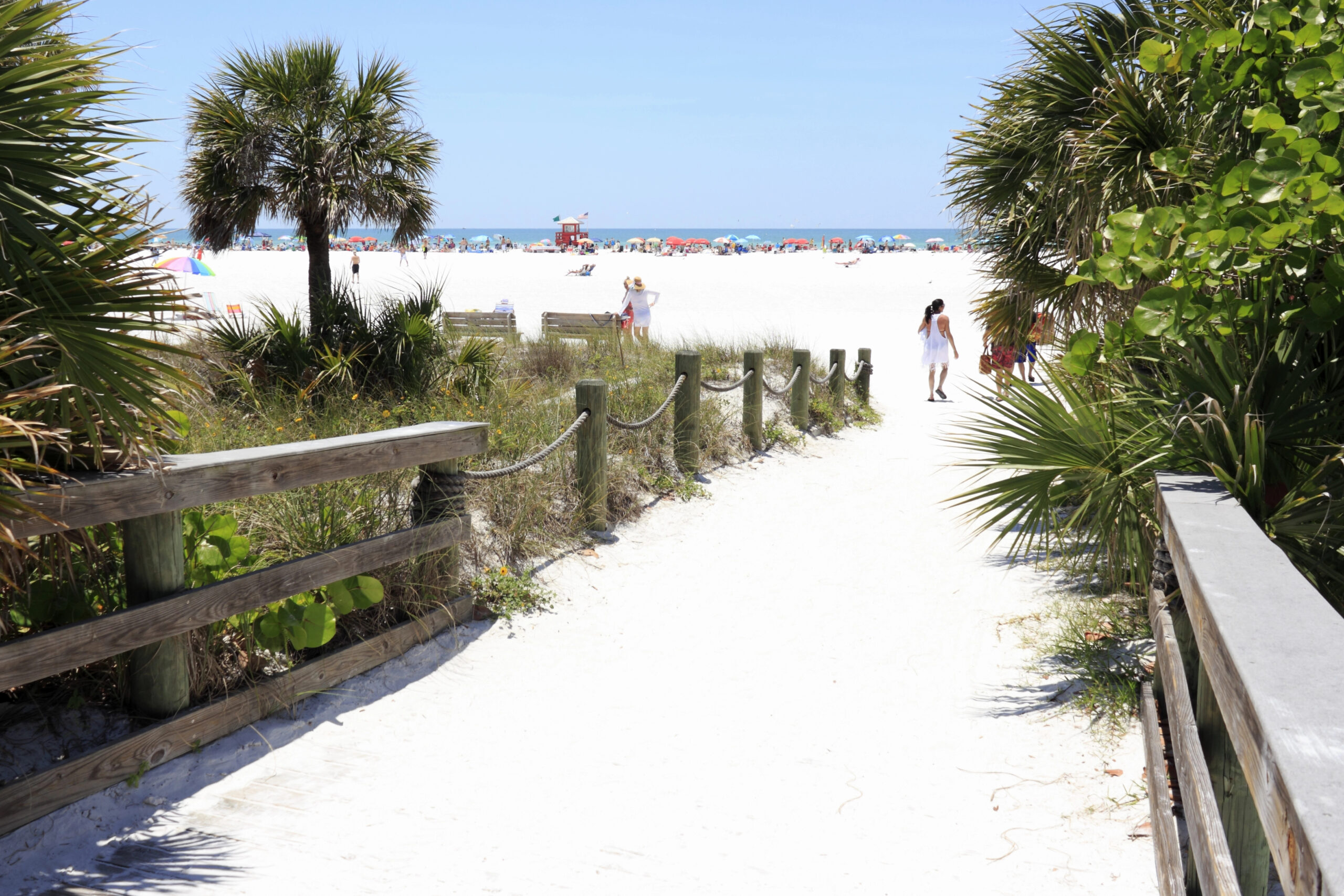
Did you know that Florida is considered the lightning capital of the United States? It has earned this title for good reason – our state receives approximately 1.2 million lightning strikes a year! Florida experiences at least one thunderstorm a day for approximately one-third of the year, and Florida’s storms can be exceptionally fierce and come on quickly. I remember sitting in my dorm room in college during thunderstorms and watching lightning strike on campus. Houses in our neighborhood have had all the electronics fried from a lightning strike. While lightning striking a person is rare, it is still smart to practice lightning safety when visiting an area that experiences greater than average lightning activity. For this reason, we would like to share some safety tips to help you remain protected while visiting.
First, let’s address some common myths surrounding lightning. You may have heard that lightning will always strike the tallest structure in the area. This is incorrect. I have personally witnessed lightning strike a beach when there were tall hotel buildings all around — and there were people on the beach at the time! Another myth is that lightning never strikes the same location twice. According to the National Weather Service, the Empire State Building is struck an average of 23 times a year! Another common belief is that you cannot be struck by lightning if there are no clouds in the sky. The fact is that lighting can travel 10-15 miles from the storm, so it is possible to be struck even if the overhead sky is not stormy. This is called a “bolt from the blue.”
How can you stay safe? One of the most important rules of thumb to remember is that if you can hear thunder, you can be struck by lightning. If you hear thunder or see a storm approaching, seek shelter immediately. Do not wait for it to get closer…Florida storms travel speedily and the weather can deteriorate rapidly. Seek shelter in a building, not under a tree or other structure. Once inside, refrain from using electronics or taking a shower until the storm has passed, as electricity from a lightning strike can travel through pipes and electric wires. A general rule to follow is to wait at least thirty minutes after the last visible lightning strike or hearing thunder before resuming your outdoor activities. The good news is that while intense, Florida thunderstorms typically pass quickly, so hopefully you will be able to get back to your vacation fun before too long!

Sarah
I am the main writer and website designer for Florida Unveiled. I love the parts of Florida visitors don’t often see: the tea-colored water that flows in cypress-laden rivers; the chorus of frogs after a hard rain; the rustle of palmetto as an unseen creature scampers by. Some of my favorite places in Florida are the Everglades, the Keys, Smyrna Dunes Park, Bok Tower Gardens, Paynes Prairie Preserve State Park, and St. Augustine’s Historic District.