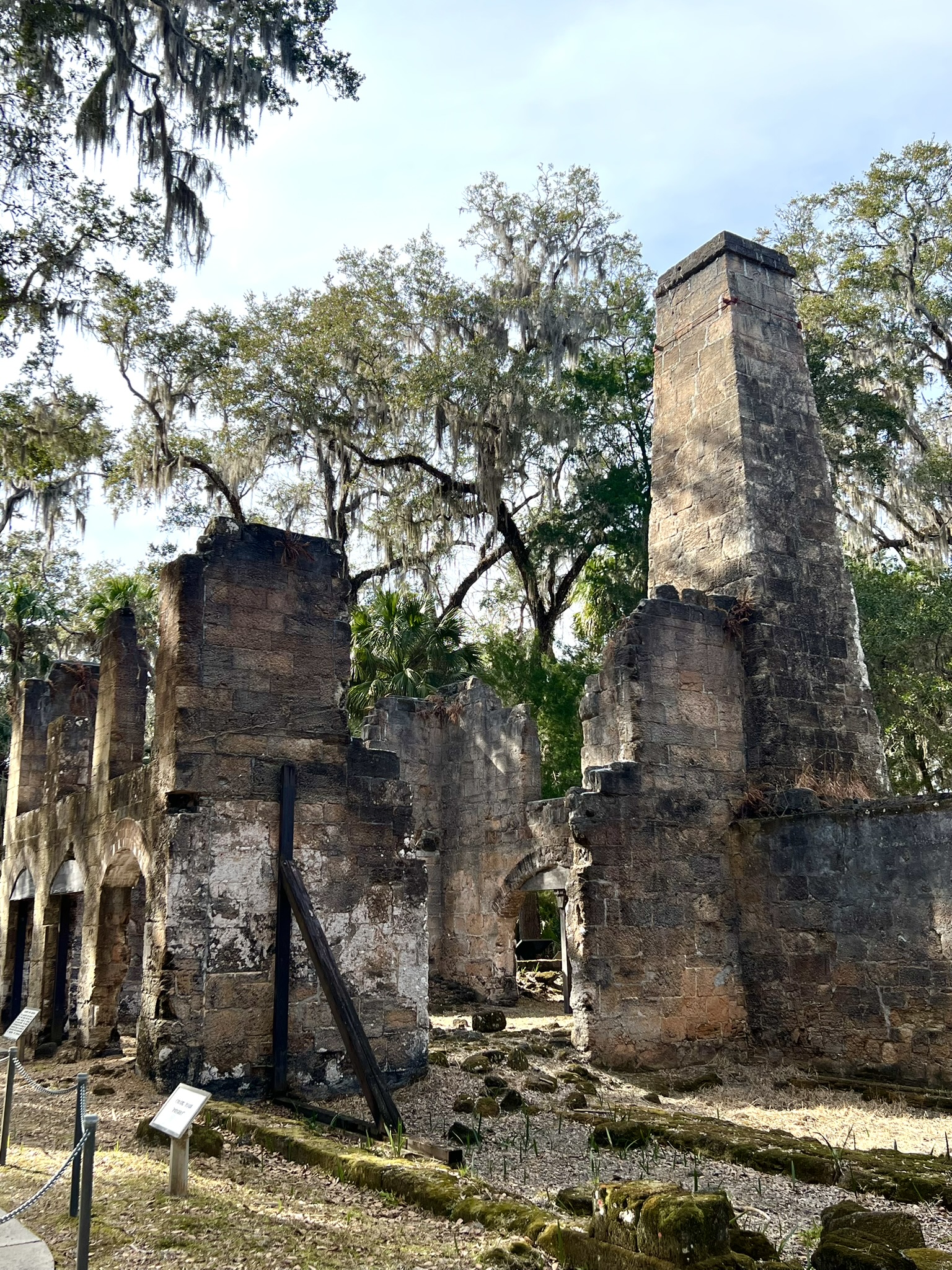
One of our favorite historic places to explore in Florida is St. Augustine, which holds the title of the oldest continuously inhabited city in the United States. Inspired by a recent visit to the Nation’s Oldest City, I decided to put together this unit about Florida’s Native Americans and Spanish explorers to share.
On this page, the unit is divided into five days, but in reality it may take anywhere from one to two weeks, depending on how in depth you want to get with each subject and how many of the additional resources and activities you want to include. This unit includes free downloadable reading passages and comprehension questions, book recommendations, hands-on activity ideas, and videos. The reading passages and worksheets linked in this unit are from Exploring Florida, a website created by the Florida Center for Instructional Technology, which is a fantastic resource for Florida history materials for teachers.
Most of the resources in this unit are geared toward upper elementary and middle school students, but of course you can modify as necessary for your family. We have previewed all the videos included, but please view them first to determine their appropriateness for your students. Links to all the books are also included, but you may be able to find some of them at your local library. We hope you enjoy learning about Florida’s Native Americans and Spanish explorers as much as we have!

Disclosure: This blog contains affiliate links. If you make a purchase through these links, we may earn a small commission—at no extra cost to you. All opinions are our own.
DAY ONE - FLORIDA'S NATIVE AMERICAN TRIBES
Although European explorers did not land in Florida until 1513, people have been living in Florida for the last 12,000 years. Archaeologists believe the earliest people to live in Florida were hunter-gatherers who followed mammoths and other large animals south. By the time the Spanish arrived in the 1500’s, Florida was home to a number of indigenous tribes such as the Calusa and Apalachee. We’ll begin this unit study by learning about a few of these tribes. (Please note that this section may be broken up into multiple days, depending on how many of the hands-on activities and additional readings you want to include.)
Begin by learning about the Calusa tribe, who lived in southwest Florida. You can use this reading passage and worksheet to get a basic overview. Because the Calusa were known as “the shell Indians” due to their extensive use of seashells, a great hands-on activity to do when learning about this tribe is to have students construct either a tool, utensil, or piece of jewelry from shells. If you don’t have any shells collected from a beach trip, this pack of 100 shells will provide plenty to work with. Using this map of Florida, locate and color the area where the Calusa lived.
Next, learn about the Tocobaga tribe, who lived near modern day Tampa Bay. You can use this reading passage and worksheet for an overview. A great activity to include when learning about this tribe is creating a model of an adz, which was a tool used for digging. (There is an illustration of one on the second page of the reading passage.) For this, your student will need a seashell, a long stick, and something to tie the shell to the stick. Locate and color the area on the map where the Tocobaga lived.
For the next tribe, use the map to trace the area from Tampa Bay up to the Panhandle, where the Apalachee tribe lived. After using this reading passage and worksheet to introduce students to the Apalachee, have students come up with a set of rules they think the tribe may have used for the ball game discussed on page one of the reading passage. Locate and color the area on the map where the Apalachee lived.
Lastly, learn about the Timucua, who lived in central and northeastern Florida and who are believed to be the first Native Americans to have contact with Spanish explorers when they landed in Florida. Use this reading passage and worksheet to learn about the Timucua, and then, if your students are interested, they can construct a model of Timucuan home (pictured below). This can be accomplished using a variety of materials found around the house or outside. Finally, locate and color the area on the map where the Timucua lived.
If your student is interested in digging deeper, the following books are excellent resources:


DAY TWO - JUAN PONCE DE LEON
Juan Ponce de Leon was a Spanish conquistador who is known for being the first European explorer to lead an expedition to Florida. To get a basic overview of his life and travels, students can use this reading passage and worksheet, as well as Who Was Ponce de Leon? by Pam Pollack and Meg Belviso and the PBS video Juan Ponce de Leon.
To incorporate geography into the lesson, students can use a map to trace Ponce de Leon’s travels. They can also create a timeline of major events in his life. A long standing legend surrounding Ponce de Leon’s expeditions is that he was looking for the Fountain of Youth, but historians debate whether this legend is based on fact or is just a myth. Older students may like to perform more research about the Fountain of Youth and write a paper about the accuracy of this legend. Younger students can write an imaginative story about what happens to them (or a fictional character) after drinking from the Fountain of Youth. Lastly, a fun hands-on activity is for students to use materials around the house to build an explorer’s ship.

DAY THREE - PANFILO DE NARVAEZ AND NUNEZ DE CADEZA DE VACA
Panfilo de Narvaez and Nunez de Cadeza de Vaca were part of an expedition that landed around modern day Tampa Bay in 1528 and eventually traveled northward into the territory of the Apalachee near present day Tallahassee. Some great resources to use to learn about this expedition are this reading passage and worksheet. To incorporate math, have students calculate how many miles it is from Tallahassee to Mexico City (where de Vaca and the few survivors traveled). For language arts, students can create journal entries from the perspective of Panfilo de Narvaez detailing his expedition, along with his thoughts and feelings about the events that transpired.

DAY FOUR - HERNANDO DE SOTO
Hernando de Soto was the governor of Cuba who set sail for Florida in 1539 looking for riches. Introduce students to de Soto with this reading passage and worksheet, as well as the PBS video Hernando de Soto. To incorporate geography, have students use a map to trace the route de Soto took on his travels in Florida. For art, students can identify and draw some of the ecosystems de Soto and the other explorers would have encountered on their expedition. (For example, students could draw a wetland.) To dive even deeper and include science, students can also research one of the ecosystems the explorers would have encountered, including the animals that lived there, and then write about what they think the explorer’s reactions might have been upon seeing an animal such as a panther or alligator.
DAY FIVE - FINAL PROJECT AND FIELD TRIP
You have many options to wrap up this unit on Florida’s first people and explorers. Based on their age and interests, students can prepare and present a short presentation about one of the tribes or explorers, or they can create a diorama of one of the expeditions. They could also write an essay discussing the impact of the explorer’s expeditions on Florida’s indigenous people or create a timeline of all the major events in the expeditions.
If time allows, today is also the perfect time to take a field trip. There are a plethora of options around the state that relate to Florida’s first people and the Spanish explorers. While not extensive, we have listed a few options below, organized by region so you can determine which one is closest to your location.
North Florida and the Panhandle
- Museum of Florida History (Tallahassee)
- Mission San Luis (Tallahassee)
- This living history museum also has virtual tours if you cannot attend in person
- Historic St. Augustine (St. Augustine)
- Sites of particular interest for this unit include the Ponce de Leon Fountain of Youth Archeological Park and Castillo de San Marcos National Monument.
- Florida Museum of Natural History (Gainesville)
Central and South Florida
- Crystal River Archaeological State Park (Crystal River)
- Emerson Point Preserve (Palmetto)
- Tampa Bay History Center (Tampa)
- De Soto National Memorial (Bradenton)
- Mound Key Archeological State Park (Estero)

We hope that you and your students enjoy this unit about Florida’s Native Americans and Spanish explorers! Do you know of any additional resources or have any other ideas for field trips? Please let us know in the comments below!
Looking for additional Florida homeschool unit studies? Check out our educational resources here!

Sarah
I am the main writer and website designer for Florida Unveiled. I love the parts of Florida visitors don’t often see: the tea-colored water that flows in cypress-laden rivers; the chorus of frogs after a hard rain; the rustle of palmetto as an unseen creature scampers by. Some of my favorite places in Florida are the Everglades, the Keys, Smyrna Dunes Park, Bok Tower Gardens, Paynes Prairie Preserve State Park, and St. Augustine’s Historic District.