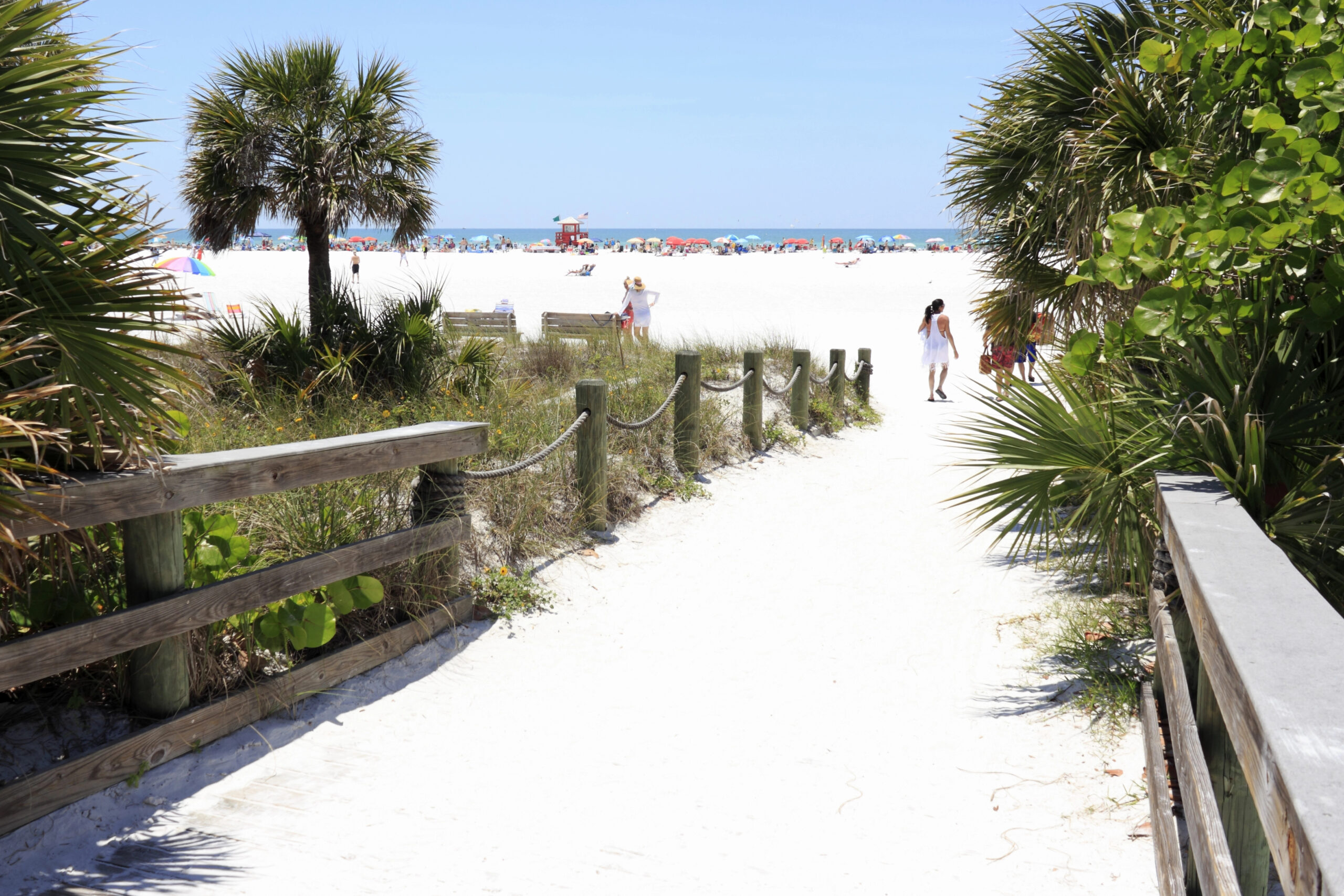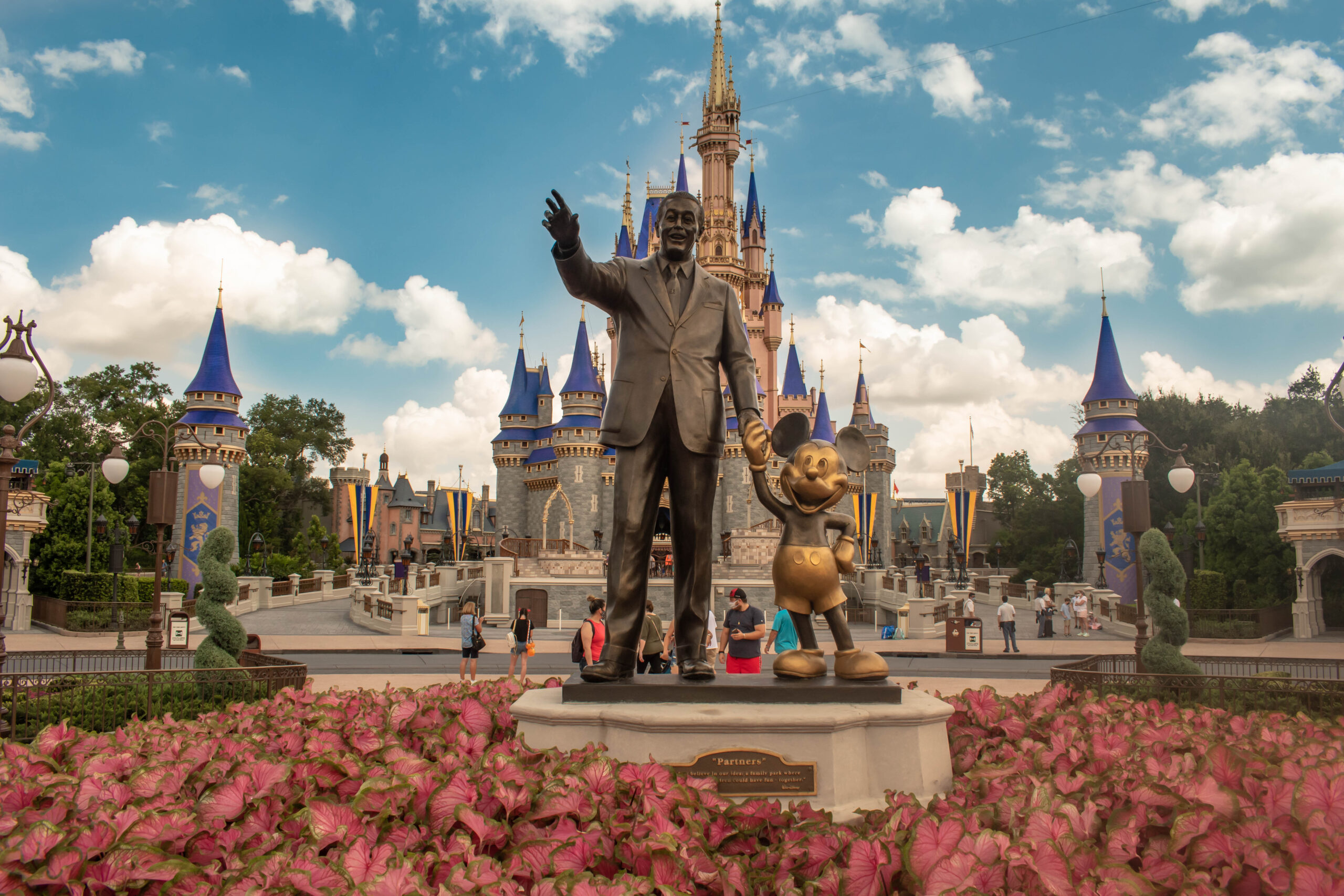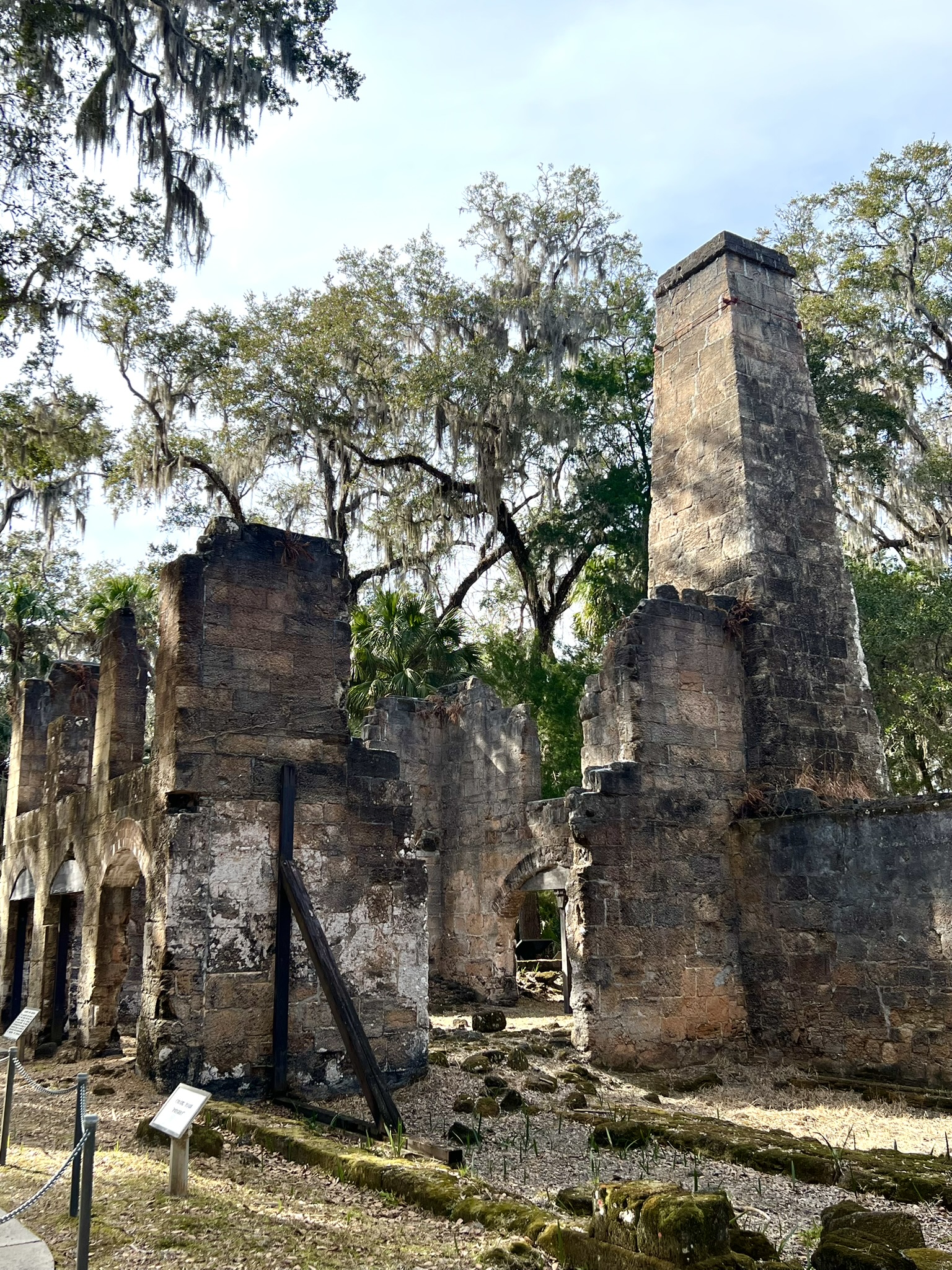
Today, Florida is best known for its theme parks, beautiful beaches, and warm weather. However, Florida has an expansive agricultural history that stretches back 500 years to the first Spanish colonists. Agriculture is a major part of Florida’s economy, providing 1.5 million jobs. What many don’t know is that the Sunshine State is the top sugarcane producer in the United States. Sugarcane has been grown in Florida since the arrival of the Spanish colonists in the 1500’s, and the ruins of several sugar plantations still tower in the shade of live oaks along the East and Gulf Coasts. I have vivid memories of driving past waving green fields of sugarcane in Okeechobee when I was younger, and today I enjoy visiting the ruins of plantations to learn about Florida’s agricultural history. Below we share more about the history of sugar production in Florida and where you can view the remnants of these sugar mills.
Disclosure: This blog contains affiliate links. If you make a purchase through these links, we may earn a small commission—at no extra cost to you. All opinions are our own.
THE HISTORY OF FLORIDA'S SUGAR MILLS
Sugar cane was originally brought to St. Augustine, Florida by Colonial Governor Pedro Menendez de Aviles in 1565. Large scale production of sugarcane began in the 1700’s, when Spain ceded Florida to England in the Treaty of Paris. To encourage settlement, the British government offered land grants, and as a result many plantations arose, particularly in East Florida. These plantations grew sugarcane along with other crops such as indigo and cotton.
Florida provided a favorable environment for growing sugarcane due to its rich, organic soil. However, the cold winters meant that crops had to be harvested once a year instead of once every two years, which led to a shorter growing season than other areas like the Caribbean.
During the Industrial Revolution, Florida’s plantation economy boomed due to the utilization of steam power. Enslaved Africans were used to grow and harvest the sugarcane, which was a long, hot, and perilous job. When the sugarcane was ready to harvest, slaves had to hand cut the stalks with machetes. Next, the canes were put through a steam-powered cane crusher to squeeze the juice out. The liquid was then boiled in a series of kettles — called a sugar train — which evaporated the water and left a crystallized syrup. The thick liquid was then put in containers and left to sit while the molasses drained from the bottom, leaving granulated sugar. Some plantations used the leftover molasses to make rum.
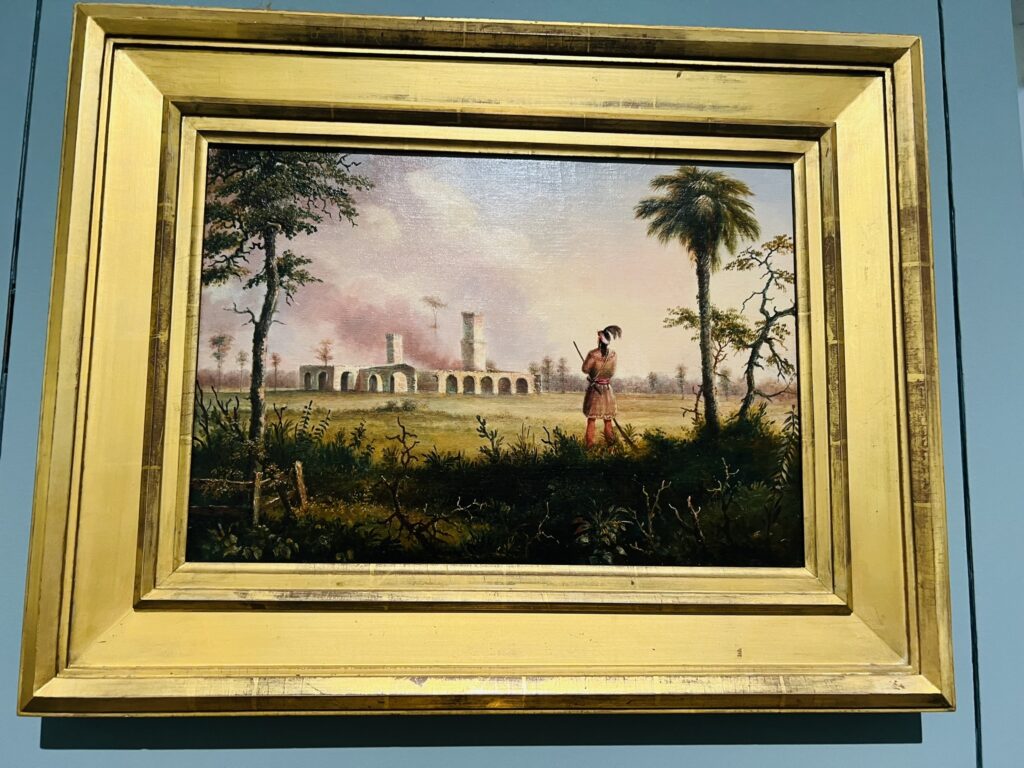
The plantation economy ended abruptly during the Second Seminole War, when Seminole Native Americans burned and destroyed several sugar mills. The painting below, “Ruins of Sugar House” by John Rogers Vinton, depicts a Seminole warrior overseeing the smoking remains of the Cruger dePeyster Plantation, located in present-day New Smyrna Beach.
WHERE TO SEE SUGAR PLANTATION RUINS IN FLORIDA
BULOW PLANTATION RUINS HISTORIC STATE PARK
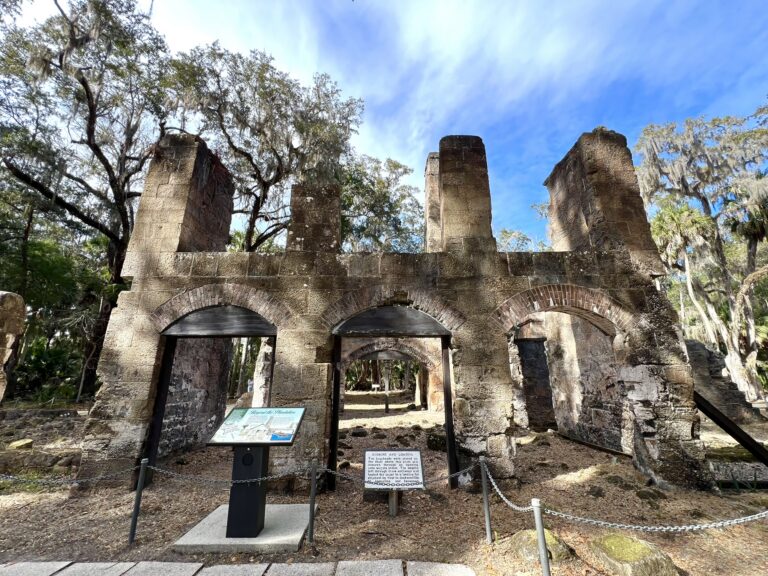
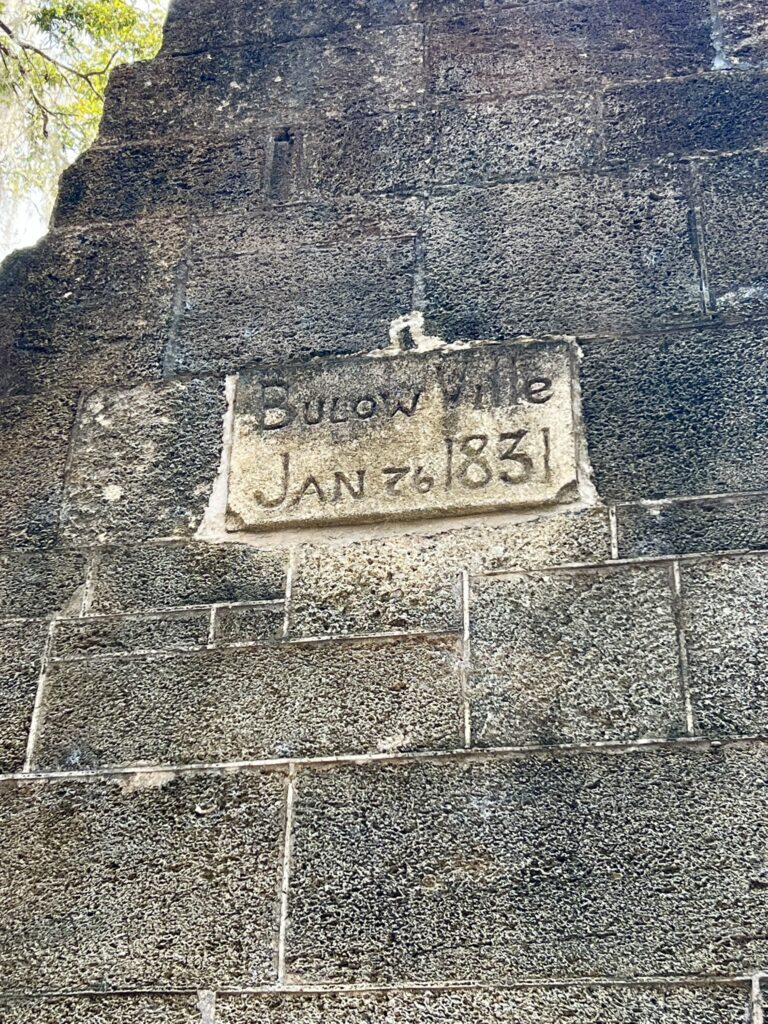
At Bulow Plantation Ruins Historic State Park in Flagler Beach, you can explore the ruins of BulowVille, a plantation owned by the Bulow family, which at one time was the largest producer of sugar, rice, cotton, and indigo in East Florida until it was destroyed during the Second Seminole War.
Today you can still see the towering coquina walls of the sugar mill, which is listed on the National Register of Historic Sites, as well as peruse an interpretive center which showcases artifacts from the area. Educational plaques walk you through the process of sugar production as you tour the ruins so you can better understand what each section was used for.
An easy, shaded 0.7 mile trail leads from the parking and pavilion area to the ruins. In addition to hiking and touring the ruins, Bulow Plantation Ruins Historic State Park also has a boat ramp where you can launch a canoe or kayak to paddle along panoramic Bulow Creek.

CRUGER-DEPEYSTER PLANTATION SUGAR MILL RUINS
Located off of Old Mission Road in New Smyrna Beach, these ruins provide a window into Florida’s industrial past. The mill was originally part of a 600-acre plantation and featured coquina stone buildings and steam-driven machinery. On Christmas Day 1835, during the Second Seminole War, Native Americans attacked and burned the site, and today only the coquina walls remain. This 17-acre site is open daily from sunrise to sunset, free to visit, and features walking paths and informative signs sharing the history of the plantation. If you are interested in visiting these ruins, you can learn more about other things to do in New Smyrna Beach here.


DUNLAWTON SUGAR MILL GARDENS
Dunlawton Sugar Mill Gardens, located just outside of New Smyrna Beach in Port Orange, has a fascinating history and is truly a unique place to visit in Central Florida.
Back before Florida officially became a state, this area was the site of Dunlawton Sugar Mill Plantation, where sugar and molasses were produced until the mill was destroyed during the Second Seminole War. It was sold and rebuilt, remaining operational until it burnt down in 1856 during the Third Seminole War.
In the 1940’s, Dr. Perry Sperber leased the land and created an amusement park called Bongoland. Bongoland featured giant concrete dinosaurs, animals, a train to ride, and a monkey named Bongo. After Bongoland closed, the property was abandoned until 1985, when Botanical Gardens of Volusia established Dunlawton Sugar Mill Gardens for visitors to explore the ruins and learn about native gardening.
The gardens are open daily from 8am-7pm and are free to visit–although donations are appreciated! You can still view some of the large dinosaur statues scattered throughout the gardens, as well as different plant collections, a children’s garden, and the sugar mill ruins.


YULEE SUGAR MILL RUINS HISTORIC STATE PARK
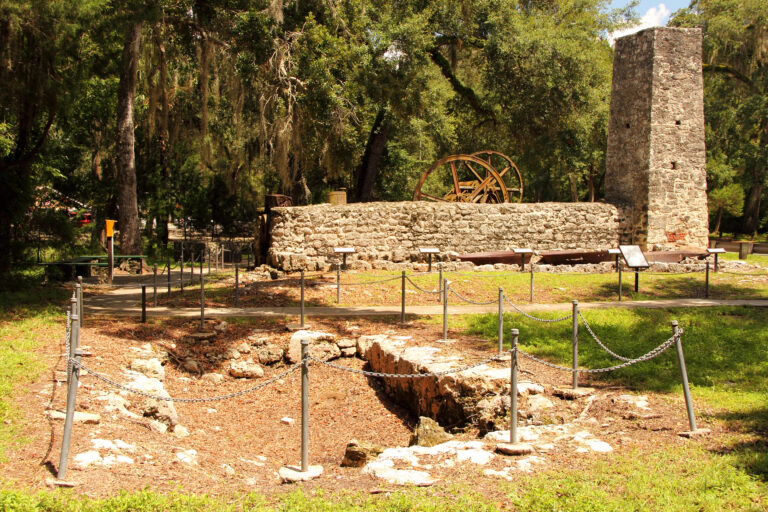
Located in the small town of Homosassa, a little over an hour north of Tampa, Yulee Sugar Mill Ruins Historic State Park contains the ruins of David Levy Yulee’s 5,000-acre sugar plantation. These ruins feature uncommonly intact machinery, including a 40-foot masonry chimney, cane press, and iron gears.
Just like BulowVille, Yulee’s plantation ruins are listed on the National Register of Historic Places and located inside a state park. Entrance is free and picnic tables and grills are available.
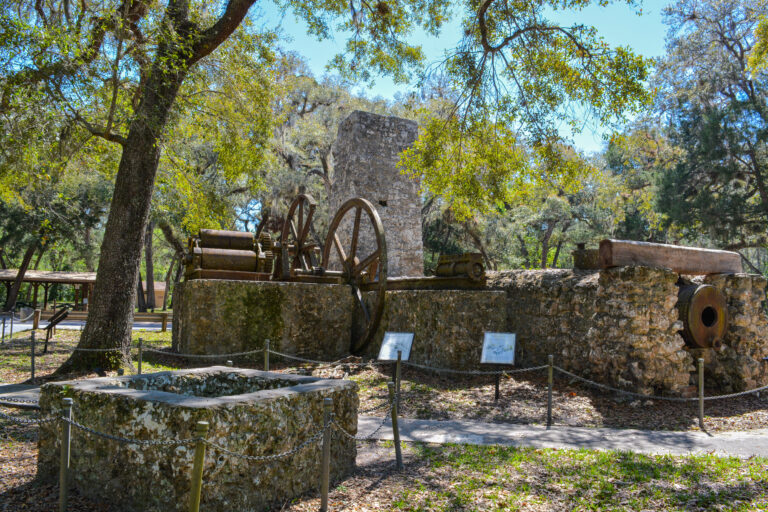
Although these ruins represent a part of Florida’s past, the sugar industry still plays a vital part in Florida’s economy today. Now centered in the nutrient rich soil around Lake Okeechobee, the sugar industry generates over four billion dollars annually. Although there are ecological challenges to growing sugarcane on a large scale–such as the impact of fertilizer runoff on the water quality of Lake Okeechobee and downstream estuaries–the fact remains that sugarcane is one of the Sunshine State’s most economically viable crops. We highly recommend visiting some of these sugar mill ruins and exploring this part of Florida’s history.
Did you find this article helpful? Please share in the comments below!

Sarah
I am the main writer and website designer for Florida Unveiled. I love the parts of Florida visitors don’t often see: the tea-colored water that flows in cypress-laden rivers; the chorus of frogs after a hard rain; the rustle of palmetto as an unseen creature scampers by. Some of my favorite places in Florida are the Everglades, the Keys, Smyrna Dunes Park, Bok Tower Gardens, Paynes Prairie Preserve State Park, and St. Augustine’s Historic District.